
"I'm a damsel. I'm in distress. I can handle this, have a nice day."
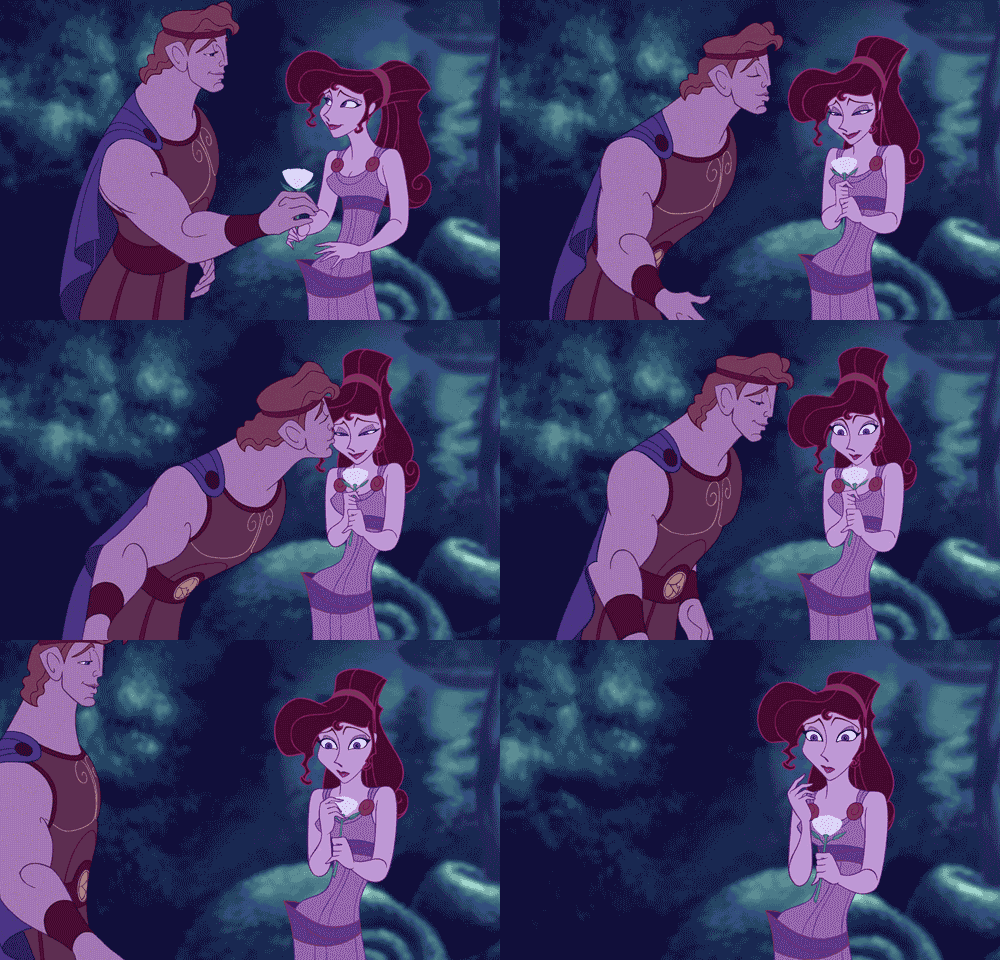
One of the essential elements that makes Hercules one of the best ancient world films is the leading love interest, Megara. An overused and degrading trope in ancient world film is creating a female love interest for the hero whose one purpose is to help the hero develop and reach his full potential. Seldom does the woman have a personality beyond her love for said hero, and even that personality trait is often underdeveloped. Meg, however, is by far the best ancient world love interest because she goes beyond the stereotypical "do-nothing" Madonna. Her background is complex, developing as a character just as much as Hercules himself.
We are first introduced to Meg being manhandled by a centaur, seemingly in need of help. Meg, however, establishes her independence from the "damsel in distress" trope with the line, "I'm a damsel. I'm in distress. I can handle this, have a nice day." From the beginning, Meg is stronger than the female characters portrayed in the likes of Quo Vadis, Spartacus, and Ben-Hur. She distances herself from the idea that a woman needs a man to save her, though Hercules will then go on to do just that. Though she is being held captive, she is physically above Hercules in the frame below, symbolizing her dominance above him. She has the upper-hand in the way she communicates with Hercules - such as calling him "Junior" or "Wonderboy" - and with her physical state on the screen.

Hercules will regain power as the scene progresses, defeating the centaur and rescuing Meg. This display of power following Meg's signifies their status as equals. Unlike past displays of male dominance in ancient world films, the two are equal partners.
The leading women of the many ancient world films live to serve their love in a way that furthers his needs. For example, this is seen in Esther of Ben-Hur when she is willing to risk contracting leprosy to save Judah's mother and sister. This action does not serve Esther in any way other than reaffirming her love for Judah - her one personality trait. The character of Meg is more complex than is typically seen of women in this genre of film. Meg is initially working for Hades, after being betrayed by her previous lover. Her past makes it difficult for her to believe in love, so she is not readily waiting for Hercules to sweep her off her feet - unlike the female equivalents in most of ancient world film. Because Meg is not inherently seen as good from the beginning, she has room to develop and grow. She must learn to love and trust again, which she eventually does.
What makes Meg's portrayal integral to the quality of the film is the power that she holds when it comes to the events of the story. It is typical for the male hero to have a weak moment due to a villainous act. It is not typical, however, that the female love interest should be the deciding factor on whether good or evil will persevere. Toward the end of the movie, Hercules is drained of his power due to his deal with Hades: Hercules will retain no strength so long as Meg remains unharmed. Hercules, weak from being drained of his strength and for having to fight a cyclops sits below a broken column. Meg sees the column will fall and harm Hercules, making the decision to sacrifice herself in order for him to regain his power to save everyone and defeat Hades. The image below is the pivotal moment of Meg pushing Hercules out of harms way. In this scene, Meg holds the power over Hercules, shown by her placement above him. She is higher above him, even pushing him in such a way that he falls even more below her. This is because Meg has taken the power of the final battle by choosing to harm herself in order for Hercules to defeat Hades. Meg, as well as the column, are in the middle of the frame, as her taking the fall is the most important event, whereas Hercules is being pushed to the left of the frame. The lighting of the frame puts all the focus on Meg's monumental decision, as everything around her in the background is dark, whereas Meg herself has a spotlight on her. Overall, this one frame shows how important Meg is to Hercules's victory, as every element puts the focus on her.
Overall, the depiction of the "ideal" woman is far superior in the film Hercules, as Meg's character is allowed to develop beyond an immediate love for Hercules, eventually allowing her to become a Hero herself by giving Hercules his strength back.
